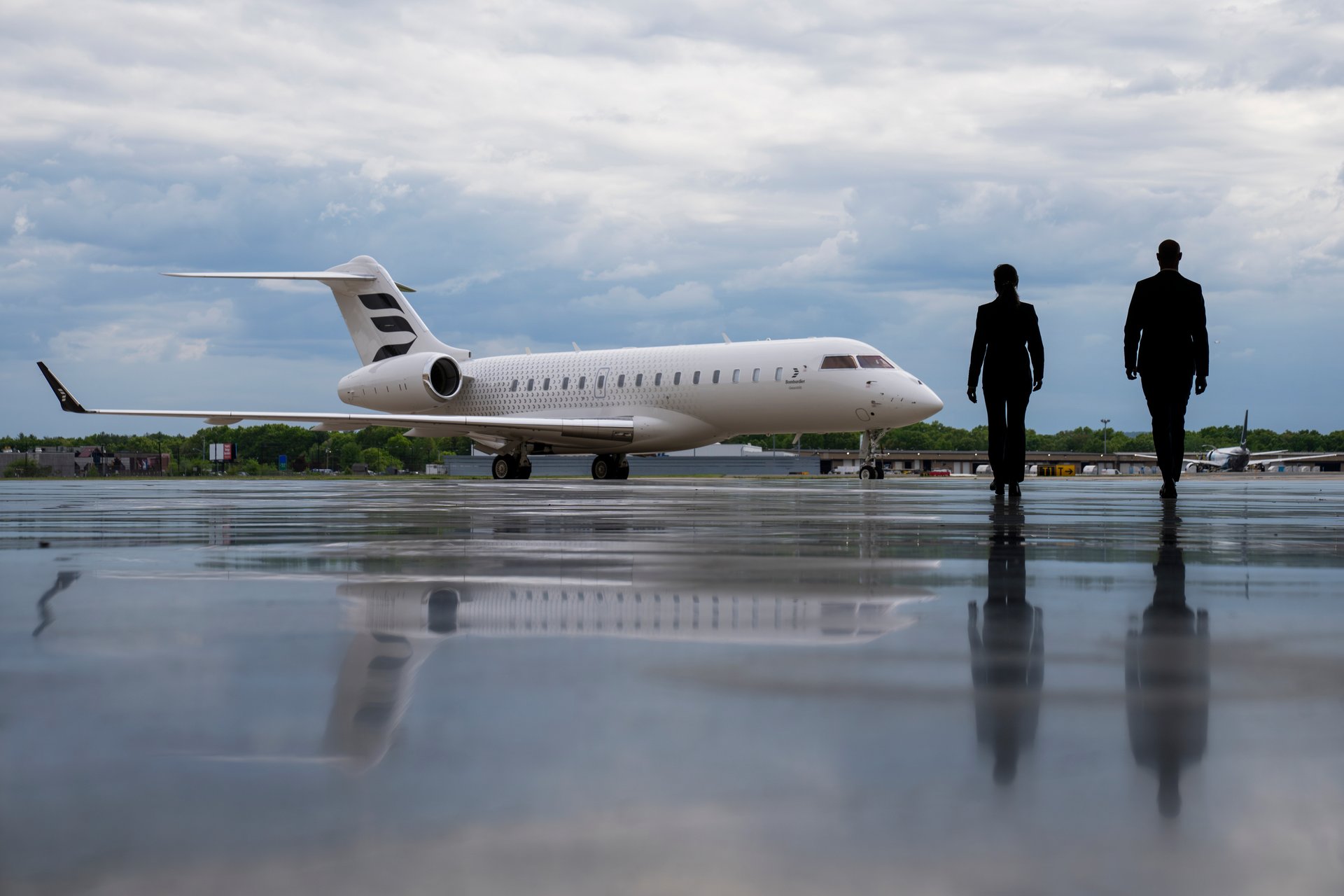
An industry in expansion, driven by technology, sustainability and strategic planning. In 2026, private and business aviation enters a phase of exponential growth. This expansion is driven by three key variables: innovation, evolving travel habits, and increasingly demanding expectations from operators, aircraft owners and corporate clients.
Far from being a short-term phenomenon, the sector is consolidating a smarter, more efficient and flexible operational model, where advanced planning and specialised Trip Support become decisive factors for the success of every operation.
A constantly expanding market
The global private charter segment is currently valued at approximately USD 22 billion, with an estimated annual growth rate of around 4.5%.
While the United States and North America continue to lead the market, regions such as Asia-Pacific and Latin America are experiencing accelerated expansion, driven by both corporate traffic and high-end leisure travel.
At the same time, there is a clear evolution in service models:
Growth of on-demand platforms
Expansion of membership programmes and fractional ownership
Greater access to business aviation for new customer profiles
 Technology as a central pillar
 Technology as a central pillar
Digitalisation is one of the main drivers of change. Artificial intelligence tools, data-driven flight planning, predictive maintenance and more agile booking systems are transforming the private aviation experience.
These advancements enable:
Greater operational efficiency
Reduced time and costs
Faster responses in complex or high-demand scenarios
For operators and clients, this translates into more predictable, safer and highly personalised operations.
Sustainability: a growing commitment
Sustainability is no longer a trend, but a strategic requirement, aligned with the international agenda of ICAO and the CORSIA programme.
In business aviation, sustainability is not limited to a statement of intent. It is a technical, regulatory and operational process that requires deep knowledge of the international framework, hands-on experience and strong adaptability.
At Aerowise, we understand that the future of business aviation will be sustainable — or it will not exist — and that this path must be pursued without losing sight of what matters most: safety, efficiency and operational continuity.
Key developments include:
Increased use of SAF (Sustainable Aviation Fuel)
Introduction of more fuel-efficient aircraft
Optimisation of routes and operational processes
Manufacturers and operators continue to develop fleets with longer range, lower environmental impact and quieter cabins, in line with international standards and evolving regulatory requirements.A new generation of users.
The profile of the private aviation passenger is also evolving. Alongside traditional corporate travellers, a new, younger and more digitally oriented generation is entering the market, prioritising:
Flexibility
Personalised experiences
End-to-end journey management
Transparency and efficiency
This shift reinforces the need for professional Trip Support capable of integrating logistics, permits, slots, fuel, handling and VIP services into a single operational framework.
The key role of Trip Support in 2026
In a scenario of market growth, saturation at key airports and high-demand events, the difference between a smooth operation and an operational disruption lies in advanced planning and proactive operational management.
Aerowise supports operators, owners and corporate clients through International Trip Support services, ensuring:
Permit and slot management
Coordination with FBOs and handlers
Fuel supply
Operational alternatives in congested environments
Regulatory and sanitary compliance
Looking ahead
The year 2026 marks a turning point for private aviation: a more mature, technologically advanced and impact-aware industry, without losing its core values of flexibility, exclusivity and efficiency.
At Aerowise, we believe that the future of business aviation is built on operational precision, experience and strategic vision, supporting every flight well beyond take-off.