
The Super Bowl is not only the most-watched sporting event in the world. Within the aviation industry, it has become one of the largest global catalysts for private and business aviation operations, generating traffic peaks that far exceed those of a standard weekend.
Looking at the figures: during Super Bowl 2025 in New Orleans, 611 business jets arrived between the Friday and Sunday prior to the game, compared with an average of just 100 private aviation flights on a typical weekend.
In Las Vegas 2024, local airports handled approximately 882 private jets, with 525 business aircraft departing immediately after the event.
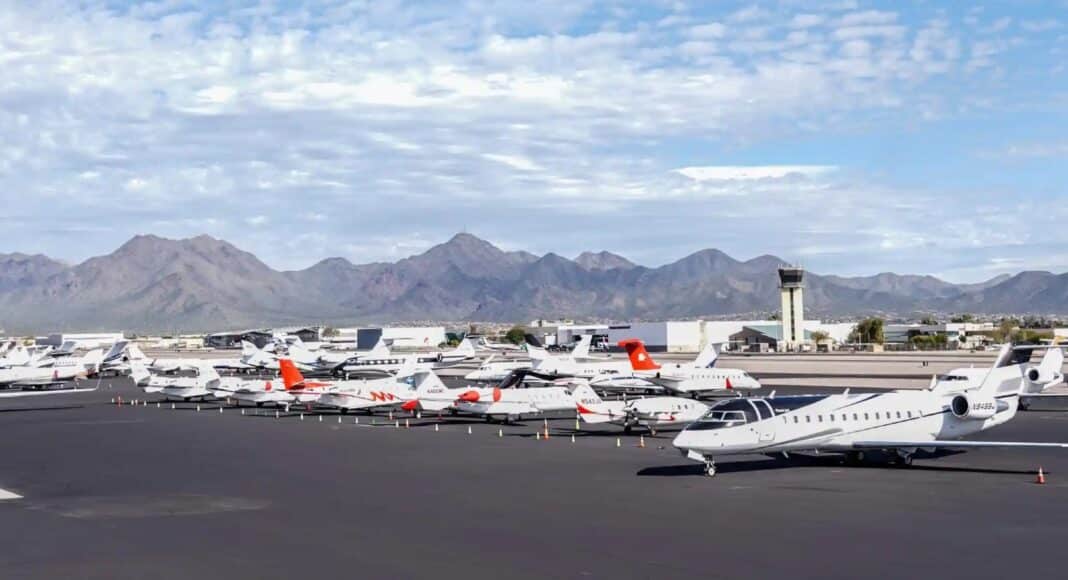
The all-time record was set in Arizona in 2023, with 931 private jets departing post-game.
Far more than celebrities
This phenomenon is not driven solely by celebrities or athletes flying on private jets. Multinational companies, professional athletes, musicians and business leaders rely on executive charter and corporate aviation to transport executives, strategic clients, competition winners and brand ambassadors (actors, influencers and public figures).
The clear preference is for Long and Ultra Long Range jets, such as the Gulfstream G650, Global 5500/7500 and Falcon 7X, capable of carrying between 14 and 16 passengers while offering private, flexible and exclusive operations.
Economic impact: far beyond flights
This sudden surge in operations generates a broad-based economic impact. The aviation system should be understood as a socio-economic ecosystem that produces both direct and indirect revenues. Broadly speaking, it includes:
- Airports
- FBOs (Fixed Base Operators)
- Ground handling
- Trip support
- Premium catering
- Maintenance
- Hospitality
For many FBOs, a single Super Bowl weekend can be equivalent to several months of standard operations. Fuel sales increase exponentially and, due to multiple operational requirements, hangar availability and pricing rise sharply as a result of high demand.
It is worth highlighting that the Super Bowl is by no means an isolated phenomenon. There are other high-profile events that match or even exceed it in terms of demand, including:
- Cannes Film Festival
- Monaco Grand Prix
- Met Gala
- Burning Man
- World Economic Forum in Davos
The constant remains the same: extreme demand peaks, intense pressure on infrastructure and an absolute need for advanced operational planning. In this context, the role of Trip Support becomes critical. During these events, the difference between a successful operation and logistical chaos depends on:
- Advance slot management
- Permit coordination
- Fuel availability
- Hangar reservations
- VIP ground services
- Operational alternatives when primary airports are saturated
 Aerowise, with extensive experience in international Trip Support, provides services that enable operators, owners and corporate clients to operate successfully even in scenarios of extreme saturation.
The industry is already working with real-time slot reservation systems, allowing pilots and operators to secure 15-minute windows months in advance — a model increasingly similar to high-demand digital platforms.
What does this tell us about the future?
The so-called “Super Bowl effect” offers several clear conclusions. It highlights the importance of civil aviation, with the United States as the leading market, while also recognising the steady expansion of emerging countries and economies. In particular, the US continues to expand airport infrastructure, developing facilities and terminals to absorb traffic from major commercial airports and hubs.
At the same time, fractional ownership and on-demand flights are gaining ground, reshaping the sector, expanding available fleets and opening the market to new players.
An industry that demands precision and agility
Beyond glamour and exclusivity, these events reveal both the extreme logistical capabilities of private aviation and its most vulnerable pressure points. It is precisely here that professional Trip Support, strategic planning and operational expertise make the difference. In an environment where every minute counts and every slot defines the most valuable asset of all — time — modern business aviation can no longer be conceived without comprehensive, proactive and highly specialised management.