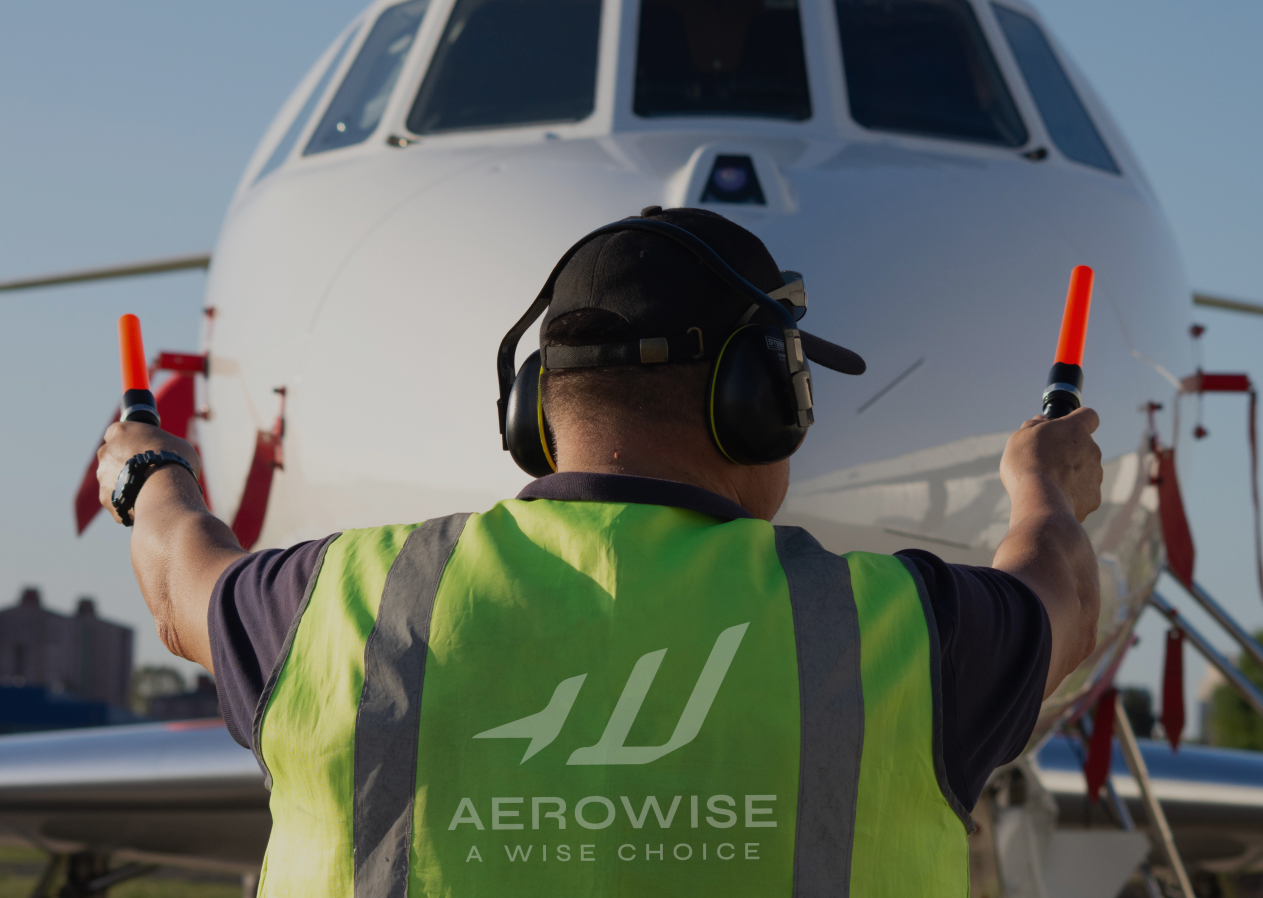
Ground handling is invisible when it works perfectly and impossible to ignore when it doesn’t.
Most passengers never think about what happens between the moment their jet touches down and the moment they walk out of the airport. That gap from wheels on the runway to door of the car is ground handling. And in private aviation, it’s where the experience is either made or broken.
What ground handling actually is
Ground handling is the complete set of on-ground services that allow a private aircraft to operate safely and efficiently while it’s on the ground. It starts before the aircraft lands and ends after it departs.
It’s not one service. It’s an entire operation running in parallel — coordinated by a single team, so nothing falls through the gap.
What it includes
Landing coordination. Confirming the slot, communicating with the tower, arranging the parking position and ensuring the ramp is ready for arrival. By the time the aircraft touches down, everything is already in place.
Aircraft reception. The ground team is present at the moment of touchdown, not arriving five minutes later. Marshalling, chocking and immediate contact with the crew. The aircraft is never left waiting on the ramp wondering where the team is.
Fuel coordination. Organizing the correct fuel type, quantity and timing. For international operations, this often involves pre-arranging with the airport fuel supplier hours in advance — because a late fuel truck doesn’t just delay a departure, it throws off an entire day.
Passenger and crew assistance. Facilitating immigration and customs clearance, coordinating VIP lounge access, managing ground transport, handling baggage. The passenger should never need to figure out what to do next — the ground team already has it covered before the door opens.
Aircraft cleaning and preparation. Interior cleaning between flights, restocking catering, preparing the cabin for the next departure. When a crew returns to their aircraft, it should be ready — not in the state they left it.
Documentation and permits. Coordinating landing permits, overflight authorizations and any specific entry requirements for foreign-registered aircraft. The paperwork that nobody talks about until it’s missing.
Departure coordination. Flight plan filing, slot confirmation, weather briefing, final checks before pushback. The aircraft leaves on time because the groundwork was done hours before — not in the last 20 minutes.
Why it matters more than most people realize
In commercial aviation, ground handling is standardized and largely invisible. In private aviation, it’s personal — and the difference between a team that does it well and one that doesn’t is felt immediately by both the crew and the passenger.
A late fuel truck delays the departure. A missing landing permit creates a ground stop. A disorganized ramp team adds friction and stress to what should be a seamless operation. An immigration coordinator who doesn’t show up means the passenger clears customs alone, in a language they may not speak, in a country they’ve never landed in before.
None of these are acceptable in a service built on precision and care.
At Aerowise, ground handling is not a commodity we outsource to whoever is available that day. It’s a core service operated by our own trained ramp team, under our own standards, with direct accountability to us — and to the passenger.
The safety dimension of ground handling
Ground handling isn’t just logistics. It’s the first and last line of operational safety for every flight.
Incorrect fueling — wrong fuel type or wrong quantity — is one of the most serious errors in aviation. It doesn’t happen with an experienced, attentive ground team. Incorrect parking or marshalling creates ramp incidents. Missing documentation creates regulatory violations that ground an aircraft mid-trip.
Every member of the Aerowise ground team is trained in private aviation protocols, not adapted from commercial handling procedures. The standards are different. The attention to detail is different. And the consequences of getting it wrong are taken seriously at every level of our operation.
Where Aerowise operates
Aerowise provides ground handling across Argentina and Uruguay, with a home base at SADF airport in Buenos Aires and operations at Bariloche (SAZS), with coverage expanding across Patagonia and the Argentine interior.
For international operators and trip support companies with clients flying to or from Argentina, Aerowise is your trusted local representative on the ground — the team that knows the airports, the procedures, the people, and how to resolve the unexpected without escalating it to the client.
We communicate in English, Spanish and Portuguese. We respond on your timeline. And we treat every operation — regardless of aircraft size or client profile — with the same level of attention.
What the crew says matters
In private aviation, the passenger experience is shaped as much by the ground team as by the flight itself.
A crew that arrives to find fuel ready, paperwork cleared, the cabin prepped and a professional team waiting — that crew performs better. The departure is calmer. The flight is smoother. And the passenger, who may not even know the name of the company that handled the ground operation, tells the operator it was the best arrival they’ve had.
That’s the standard we work to. Not to be noticed — but to make sure nothing goes wrong.
The best compliment we receive isn’t from the operator who booked us. It’s from the passenger who didn’t know our name — but told the operator they’ve never had a smoother arrival.
For operators and brokers flying into Argentina
If you’re coordinating an international operation with a stop or destination in Argentina or Uruguay, Aerowise removes uncertainty from your planning.
We handle permits, slots, fuel, customs coordination and full passenger assistance. We keep you updated in real time. And if something changes — weather, slot, technical issue — you hear it from us first, with a solution already in motion.
Because in this industry, the operators who come back are the ones who never had to explain to their client what went wrong on the ground.
Planning an operation in Argentina or Uruguay? → Chat with us on WhatsApp